
Why Do You Flip the Fraction When Dividing?
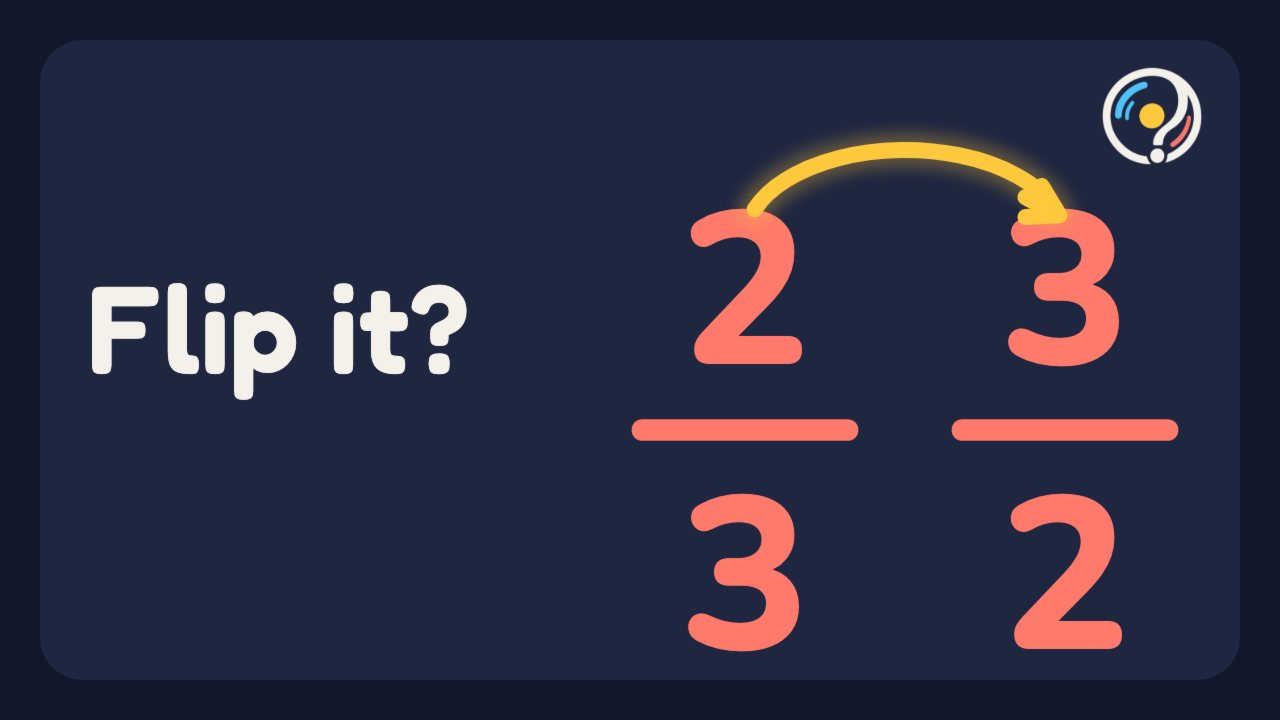
The short answerWe flip because the bottom number cuts, and the top number groups.
Premieres Wed, September 30, 4 PM PT
Watch on YouTube · Episode 002
What the video explains
Dividing asks how many pieces of one size fit into an amount. To divide by 2/3, cut every whole into thirds (times 3), then group the thirds in twos (divided by 2). Times 3, then divided by 2, is the same as times 3/2: the fraction flipped.
New word: reciprocal
Free lesson pack
A printable PDF for class or home: teacher guide, a hands-on activity, student worksheet, discussion questions, a six-question quiz, and the answer key.
Download the lesson pack (PDF) Use it in Edpuzzle
Edpuzzle: the video with quiz questions that pop up as it plays. Copy it to your classes for free.
Grades 5–7 · Common Core 5.NF.B.7, Common Core 6.NS.A.1
Full transcript
Hook
Here's a rule from math class. To divide by a fraction, flip it and multiply. Three divided by one half equals six. Wait. Dividing made it bigger? And why does flipping even work?
Puzzle
Usually, dividing makes things smaller. Share twelve cookies among three friends, and each friend gets four. But three divided by one half is six. Six is bigger than three! And flipping sounds like a magic trick, not a reason. Let's find the reason. It starts with what dividing really asks.
Zoom In
Twelve divided by three can also ask: how many threes fit into twelve? Lay them end to end, and count. One, two, three, four. Four threes fit. So dividing is a fitting question. How many of this piece fit into that amount? Now try three divided by one half. How many halves fit into three? Cut each whole in half. Each whole holds two halves. So three wholes hold six. That's why the answer got bigger. The piece is smaller than one, so it fits more than once in every whole. Try thirds. Each whole holds three thirds, so three divided by one third is nine. See the pattern? Dividing by one half is times two. Dividing by one third is times three.
Aha
But what about two thirds? How many two-thirds fit into four? Take it in two steps. First, cut every whole into thirds. Four wholes make twelve thirds. That's times three. But each piece we need is two thirds. So group the thirds in twos. Twelve thirds make six groups. That's divided by two. Look at those two steps. Times three, then divided by two. Put them together, and you get times three over two. That's two thirds, flipped! The bottom number says how to cut, so you multiply by it. The top number says how many pieces make a group, so you divide by it. That's the flip. The flipped fraction has a name. Reciprocal. So four divided by two thirds is four times three halves. Six. Six pieces of two thirds fill four wholes exactly. It works for any fraction. Dividing by three fifths? Cut into fifths, then group in threes. That's times five thirds.
Why It Matters
This isn't just for math class. Any time you ask how many pieces fit, you're dividing. Say a recipe needs three cups of flour. But your only scoop holds three quarters of a cup. How many scoops? Cut each cup into quarters: twelve quarters. Group them in threes: four scoops. Or skip the cutting. Flip and multiply. Three times four thirds is four. Flipping is just a shortcut for cutting and grouping. Forget the rule? Draw the bars, and you can figure it out again.
One-Line Recap
We flip because the bottom number cuts, and the top number groups.