
Why Does a Negative Times a Negative Equal a Positive?
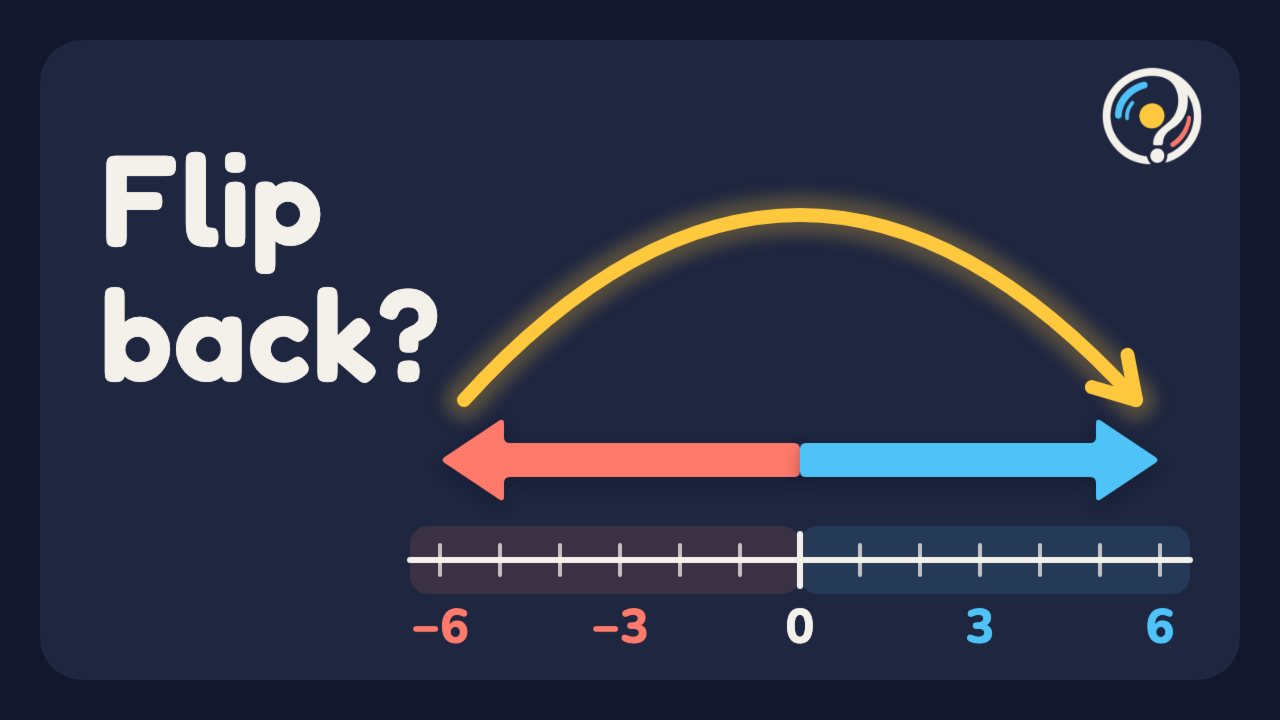
The short answerA negative flips you to the opposite side, so two negatives flip you back.
Premieres Wed, October 7, 4 PM PT
Watch on YouTube · Episode 004
What the video explains
On a number line, multiplying by a negative number flips the answer to the opposite side of zero. Flip once and you land on the negative side. Flip again and you're back on the positive side. A simple counting pattern shows it has to work this way, and a robot rolling backward shows it in real life.
New word: opposite
Free lesson pack
A printable PDF for class or home: teacher guide, a hands-on activity, student worksheet, discussion questions, a six-question quiz, and the answer key.
Download the lesson pack (PDF)
Grades 6–8 · Common Core 7.NS.A.2a, Common Core 6.NS.C.6a
Full transcript
Hook
Negative two times negative three. The answer? Positive six. Two negatives made a positive. But why?
Puzzle
Negative numbers are less than zero. Like a temperature below zero. So two negatives together should be extra negative, right? Negative six? Nope. Math says positive six. That feels backwards. Lots of people just memorize the rule. But there's a real reason, and you can see it. Let's find out what a negative really does when you multiply.
Zoom In
Here's a number line. Positive numbers go right. Negative numbers go left. Two times three means two jumps of three. Six. Two times negative three means two jumps of negative three. Each jump goes left. Negative six. That one makes sense. But negative two times something? How do you jump negative two times? Let's let a pattern answer. Start with negative three times three. Turn it around: three jumps of negative three. Negative nine. Now count the second number down. Times two, negative six. Times one, negative three. Times zero, zero. Look at the answers. Every step down, the answer goes up by three. So what's next? Negative three times negative one.
Aha
Keep the pattern going. Up three more. Positive three. Times negative two? Up three more. Positive six. If the answer were negative six, the pattern would break right at zero. So the pattern says positive. But what is the negative doing? Watch. Three times three is nine. Negative three times three is negative nine. Same size. Opposite side of zero. The negative flipped it. Nine and negative nine are the same distance from zero, on opposite sides. They have a name. Opposites. So times a negative means: flip to the opposite. Flip once, you land on the negative side. Flip again, you're back on the positive side. Negative two times negative three. Two times three is six. Flip once. Flip twice. Positive six. Try another. Negative four times negative two. Four times two is eight. Flip, flip. Positive eight. And a negative times a positive? Only one flip. So it stays negative.
Why It Matters
This happens in real life too. A robot is rolling backward, two meters every second. Where was it three seconds ago? Backward speed, times backward time. Negative two times negative three. Positive six. Rewind the video, and there it is, six meters on the positive side. What if a negative times a negative were negative? Then the math would say the robot was at negative six. But rewind, and it isn't there. Two backwards make a forwards. That's the same flip. Got three negatives? Count the flips. Flip, flip, flip. You land on the negative side. An even number of flips always lands on positive.
One-Line Recap
A negative flips you to the opposite side, so two negatives flip you back. Next time: why is the sky blue?