
Why Is the Ocean Salty?
The short answerRivers carry salt into the ocean, and only the water leaves.
Premieres Sun, October 18, 4 PM PT
Watch on YouTube · Episode 007
What the video explains
Rain wears tiny bits of salt out of rocks, and rivers carry them to the sea. River water has salt in it too, just too little to taste. When the sun warms the ocean, the water evaporates and the salt stays behind. Water makes a round trip; salt only travels one way. Over millions of years, that adds up. We also see why a dried swimsuit feels crusty, and why Utah's Great Salt Lake is even saltier than the ocean.
New word: evaporation
Free lesson pack
A printable PDF for class or home: teacher guide, a hands-on activity, student worksheet, discussion questions, a six-question quiz, and the answer key.
Download the lesson pack (PDF)
Grades 4–8 · NGSS MS-ESS2-4, NGSS 4-ESS2-1
Full transcript
Hook
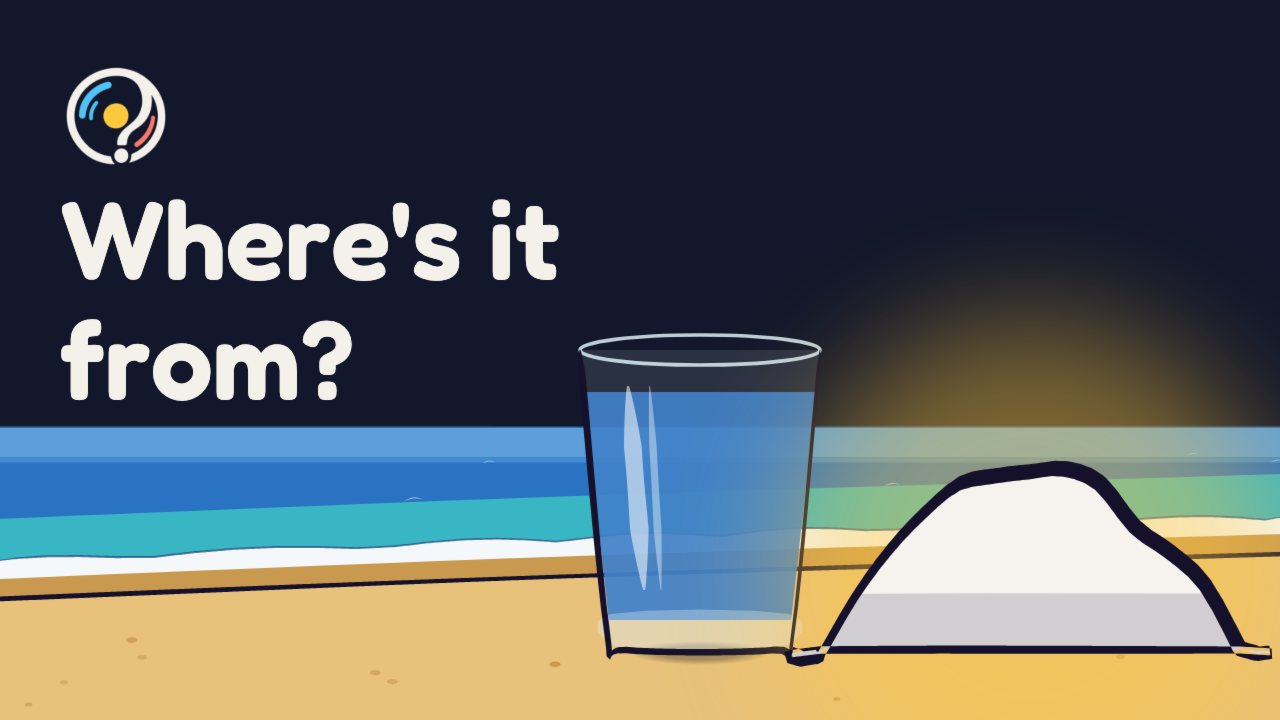
Splash! A wave gets you right in the face. Blech! It's salty. A glass of seawater has more than a teaspoon of salt in it. So where did all that salt come from?
Puzzle
Here's the weird part. Rivers pour into the ocean all day, every day. And river water isn't salty. It's fresh water. So all that fresh water should water the ocean down. Like adding water to salty soup. But it doesn't. The ocean stays salty. So where's the salt coming from? Let's zoom in on one drop of river water.
Zoom In
Here's river water, up close. Mostly water molecules, jiggling around. But look. Mixed in, here and there, are a few other bits. These are bits of salt. So river water does have salt in it. Just too little to taste. Where does it come from? Let's follow the water back uphill. Rain picks up a gas from the air. It's the same gas that makes soda fizzy. That makes rain a little better at breaking down rock. Year after year, rain wears the rock down. It carries off tiny bits of salt. Streams join rivers. Rivers run to the sea. And the salt rides along. Deep under the sea, volcanoes and hot springs add some salt too. But wait. Rivers bring in fresh water too. So why does the salt pile up?
Aha
Watch what happens when the sun warms the ocean. The water molecules jiggle faster. Some break free and float up into the air. But the salt can't come along. It stays behind. This has a name. Evaporation. The water goes up, makes clouds, and falls again as fresh rain. So water makes a round trip. But salt only travels one way: into the ocean. Rivers bring salt in. The sun takes only water out. So the salt stays. Now do that for millions and millions of years. Some salt gets trapped in mud and rock on the sea floor. But most of it stays in the water. That's how the ocean got so salty. And that's a lot of salt. Scoop it all out, spread it over the land, and it would pile up as tall as a forty-story building.
Why It Matters
You can see this at the beach. Let a wet swimsuit dry in the sun, and it feels crusty. The water left. The salt stayed behind. And remember those rivers? Most lakes stay fresh. A river carries their water back out. But some lakes have no way out. Water leaves only by evaporation, so the salt piles up. Utah's Great Salt Lake works this way. Even its least salty part is about three times saltier than the ocean. Same trick, smaller ocean.
One-Line Recap
Rivers carry salt into the ocean, and only the water leaves. Next time: why is anything to the power of zero equal to one?